
You Never Win a Fight—Victory Is Granted by Your Opponent

Why honor, honesty, and responsibility matter in Oplomachia
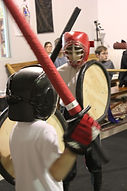
There is a saying our students learn at the Knight Errant Academy of Chivalry:
“In Oplomachia, you never win a fight. You are always granted victory by your opponent.”
At first, that may sound like an unusual way to describe competition.
But it expresses one of the most important lessons we teach.
When our students enter the lists to fight, the Marshal controls the field. The Marshal ensures that the fighters are prepared, that the equipment and environment are safe, and that the rules of the contest are followed.
Nothing begins until the Marshal calls:
“Lay On!”
But once the fight begins, something important happens.
Responsibility passes, in part, to the fighters themselves.
The Fighter Who Receives the Blow Calls the Blow
In Oplomachia competition, the person who is struck has the responsibility to acknowledge the blow.
Students are trained to recognize what constitutes a good and effective strike. This requires calibration. They learn the appropriate level of contact and how to distinguish a valid blow from incidental contact, a glance, or something that would not represent an effective action within the rules of the contest.
For young and inexperienced students, the Marshal naturally provides more guidance. Learning how to judge contact is itself a skill, and we don’t expect a new student to possess the judgment of an experienced fighter.
But from the beginning, we establish an important principle:
The fighter is responsible for the blows received.
That means something rather extraordinary in competition.
Your opponent may know that they struck you.
The Marshal may have seen it.
The spectators may have seen it.
But ultimately, we are teaching the student that their own honor should be enough to make them acknowledge it.
What Happens When Nobody Else Knows?
Character is easy when there is no cost attached to it.
It becomes considerably more meaningful when honesty costs you something you wanted.
Imagine a student has fought through an entire tournament.
They have reached the final.
Their friends are watching. Their family is watching. They want desperately to win.
During the fight, their opponent strikes them.
Perhaps the Marshal’s view was obstructed.
Perhaps nobody else is certain what happened.
But the student felt it.
Now the most important moment in that tournament may have nothing to do with swordsmanship.
The student has a choice.
They can remain silent and perhaps receive the victory.
Or they can acknowledge the blow.
That is where all our conversations about Honor, Honesty, Courage, and Humility stop being abstract ideas.
The student has to live them.
Victory Requires Two People
This is why we say that you never truly win an Oplomachia fight.
Your opponent grants you the victory.
They acknowledge that your technique succeeded.
They accept the result even though accepting it may mean their own defeat.
And because of that, victory carries an obligation in the other direction as well.
If another fighter possesses the character to acknowledge your successful blow, then they deserve your respect.
There is no place for humiliating them.
There is no reason to gloat.
Your opponent has just demonstrated the very quality of character that allows the tournament to function.
Without their honesty, your victory means considerably less.
The winner therefore owes something to the person who lost:
Respect.
The Marshal Cannot Give You Honor
The Marshal has an important role in every tournament.
The Marshal controls the field, protects the fighters, observes the action, resolves uncertainty, and provides greater guidance when students are young or inexperienced.
But there is something the Marshal cannot do.
The Marshal cannot make a student honorable.
We can establish rules.
We can teach proper calibration.
We can supervise.
We can correct poor decisions.
But eventually, the student must choose what kind of fighter they are going to become.
That is one reason we place responsibility for acknowledging a blow upon the fighter who receives it.
We want our students to develop an internal standard rather than behaving properly only because an authority figure is watching them.
Learning How to Lose Is Part of Learning How to Fight
Martial arts schools understandably spend a great deal of time teaching students how to succeed.
We believe there is also tremendous value in teaching them how to lose well.
Losing does not diminish the student.
A student can fight with tremendous skill, courage, and determination and still encounter someone who is better on that particular day.
They acknowledge the blow.
They salute their opponent.
They learn from the experience.
And they return to training.
There is strength in that.
In fact, a student who can acknowledge the blow that eliminates them from a tournament may demonstrate more character in defeat than someone else demonstrates in victory.
That lesson reaches far beyond swordsmanship.
Chivalry Has to Cost Something
We talk frequently about chivalry at the Knight Errant Academy of Chivalry.
But chivalry cannot simply be something written on a wall or discussed at the end of class.
Eventually, it has to influence behavior.
Honor matters when dishonesty would benefit you.
Courage matters when you are afraid.
Humility matters when your pride has been wounded.
Honesty matters when nobody else knows the truth.
And chivalry matters when following it costs you something.
A tournament gives our students a small and controlled environment in which they can experience exactly those moments.
That is one reason competition has a place within our curriculum.
We certainly want to see whether our students can fight.
But we are also watching to see who they are becoming while they fight.
Granted Victory
Years from now, most of our students probably won’t remember every tournament bout they fought.
They may not remember every score or every medal.
But we hope they remember something much more important.
When someone places their trust in your honesty, honor that trust.
When you know something is right, do it even when nobody else saw what happened.
When you lose, lose with dignity.
When you win, remember the person standing across from you made that victory possible.
Because in Oplomachia:
You never win a fight.
You are granted victory by your opponent.
And learning to become the kind of person worthy of granting—and receiving—that victory is far more important than any trophy.
Syr Gemini


Comments